China Top 10 Flexible Graphite Sheet Suppliers?
Flexible Graphite Sheet products support sealing in pumps, valves, heat exchangers, and other demanding equipment. Their performance depends on more than the material name. Density, thickness, graphite purity, reinforcement, and manufacturing consistency can all affect sealing results. A sheet that looks suitable on paper may behave differently under heat, pressure, or repeated compression.
China has a broad supplier base, from specialized graphite processors to manufacturers offering custom-cut components. This guide introduces ten suppliers for buyers to investigate, not a universal ranking. The right choice depends on the application. A maintenance team replacing valve gaskets may value fast sampling, while an equipment manufacturer may need stable production batches and documented quality controls. Ask for current specifications, sample sheets, test information, and details about tolerances. Small details matter.
Supplier claims deserve careful checking. Confirm whether listed properties apply to the exact grade being quoted, and clarify any coating or reinforcement options. Request clear answers about lead times, packaging, and production capacity. These checks can reveal gaps before an order is placed. No short supplier list can replace technical review or sample testing. That caveat matters. Available information may also change, so buyers should verify details directly rather than treating a directory as final proof. Use the profiles as a practical starting point, then compare each supplier against your operating conditions, quality expectations, and delivery needs.
What Flexible Graphite Sheets Are and How They Are Made
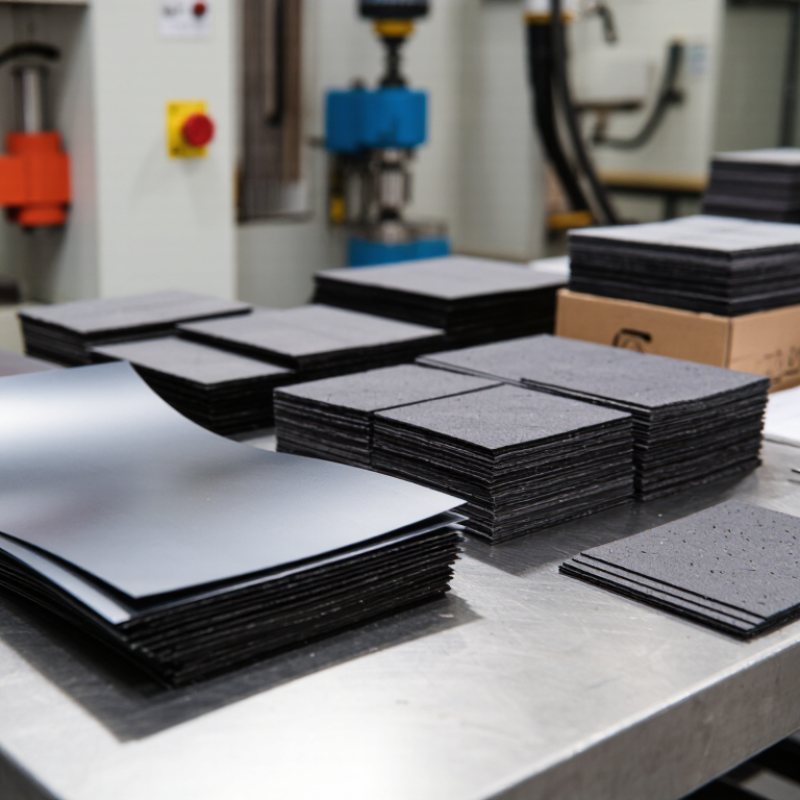
Flexible graphite sheets are made from graphite, a layered carbon material that can tolerate high temperatures and conduct heat. Manufacturers typically treat natural graphite flakes with an intercalating agent, then heat them quickly. The flakes expand into a loose, worm-like material. Roll pressing compresses this material into thin, flexible sheets. The process sounds simple, but pressure and density affect how a sheet performs.
These sheets can conform to uneven surfaces and help seal joints in equipment such as pumps, heat exchangers, and pipe flanges. Their performance depends on more than thickness. Density, purity, compressibility, and oxidation resistance matter too. Some grades contain reinforcements or other additions, so “graphite sheet” does not describe one uniform product. A common mistake is choosing by appearance alone. Even a neat, smooth sheet may not suit a hot, oxidizing environment. I’d check measured properties and operating conditions rather than assume flexibility means universal fit.
Tips: Ask for thickness and density tolerances, not just nominal values. Check temperature limits in the actual atmosphere. Handle cut edges carefully; thin sheets can tear, and small variations may affect sealing pressure.
China Top 10 Flexible Graphite Sheet Suppliers? - What Flexible Graphite Sheets Are and How They Are Made
This table is a supplier-selection guide, not a ranked list of companies. It summarizes common flexible-graphite sheet capabilities and practical checks for evaluating suppliers without naming businesses or brands.
| No. | Supplier Capability | Relevant Product or Process Facts | What Buyers Should Verify |
|---|---|---|---|
| 1 | Expanded graphite production | Flexible graphite is commonly made from natural graphite flakes. The flakes are intercalated, rapidly heated to expand them, and then compressed into a continuous sheet without a conventional polymer binder. | Ask for a process description, material origin documentation, and confirmation that the supplied product is flexible graphite rather than a graphite-filled polymer or coated metal sheet. |
| 2 | Sheet thickness range | Flexible graphite is available in multiple thicknesses. The achievable range depends on the production line, density, and whether the material is supplied as sheet, roll, or a converted component. | Confirm nominal and tolerance limits, measurement method, sampling frequency, and whether thickness is measured before or after any lamination or coating. |
| 3 | Density and compressibility control | Density and compressibility affect sealing behavior, recovery, and handling. Higher density does not automatically mean better performance for every gasket or thermal-management application. | Request test results for density and compressibility, along with the test method and conditions. Match the target values to the application’s pressure and sealing requirements. |
| 4 | Purity and ash control | Graphite purity and ash content can matter in applications involving contamination limits, electrical performance, or high-temperature service. Requirements vary by end use and grade. | Check the specification, test method, and lot-specific certificate of analysis. Confirm whether the stated value is a guaranteed limit or a typical result. |
| 5 | Thermal and electrical properties | Graphite conducts heat and electricity, but measured performance depends on density, orientation, thickness, test direction, and test method. In-plane and through-plane values can differ. | Request property data with units, direction, temperature, and measurement method clearly stated. Compare like-for-like results rather than relying on a single headline value. |
| 6 | Oxidation-resistant options | Graphite can oxidize in air at elevated temperatures. Some products use oxidation-inhibiting treatments, but their effectiveness depends on temperature, atmosphere, exposure time, and application conditions. | Ask for the treatment type and supporting test conditions. Confirm whether performance claims apply to air, inert gas, or another atmosphere, and validate them in the intended use environment. |
| 7 | Reinforced and laminated formats | Flexible graphite may be supplied with metal foil, mesh, or other reinforcement to improve handling or mechanical strength. Composite construction changes the product’s properties and use limits. | Review the full layer structure, reinforcement material, bonding method, thickness contribution, and any temperature or chemical restrictions for the complete composite. |
| 8 | Converting and custom fabrication | Common converted forms include die-cut gaskets, rings, strips, and custom shapes. Cutting quality and dimensional control can be important for sealing and assembly. | Confirm drawing revision control, dimensional tolerances, edge quality, packaging, and the supplier’s ability to maintain repeatability across production batches. |
| 9 | Quality assurance and traceability | Consistent raw materials and process controls help reduce variation between lots. Inspection plans commonly address dimensions and specified material properties. | Request a sample inspection report, lot traceability details, change-notification practices, and the documented procedure for handling nonconforming material. |
| 10 | Application support and documentation | Flexible graphite is used in sealing, thermal management, and other industrial applications, but suitability depends on temperature, pressure, medium, design, and applicable regulations. | Provide operating conditions and request a grade recommendation with supporting documentation. Verify compatibility and performance through application-specific testing before production use. |
Related Posts
-

Innovative Applications of Flexible Graphite Sheet in High Performance Industries
-
China Top Carbon Graphite Sheet Manufacturer and Supplier
-
Top Graphite Insulating Lining Paper Suppliers
-
What Is Carbon Graphite Foil Used For?
-
5 Best Flexible Graphite Sheet Manufacturers Worldwide?
-

10 Best Graphite Wall Paper Suppliers Worldwide