Top Graphite Insulating Lining Paper Suppliers
Choosing among the top Graphite Insulating Lining Paper suppliers requires more than comparing prices. Performance depends on fiber structure, graphite purity, thickness control, and resistance to heat transfer. A reliable supplier should explain these details clearly. Product samples, technical data sheets, and traceable quality records offer stronger evidence than attractive catalog images.
Graphite Insulating Lining Paper is used where controlled insulation, surface protection, and thermal stability matter. In practice, small differences can affect forming accuracy, service life, and production downtime. Experienced buyers often examine roll consistency, cutting tolerance, packaging, and storage guidance before placing large orders. They may also request samples for furnace, foundry, or high-temperature tooling evaluations.
Supplier experience matters.
However, no supplier is perfect for every application. One company may offer excellent customization but limited stock. Another may provide fast delivery but fewer independent test reports. This comparison therefore considers manufacturing capability, material expertise, certification practices, customer support, and long-term reliability. It also recognizes an often-overlooked point: published specifications may not fully reflect factory conditions.
The following guide introduces leading suppliers and explains how to assess them responsibly. It focuses on practical evidence, not exaggerated claims. Readers should verify current certifications, production capacity, and compliance requirements directly with each supplier. Careful review remains essential, especially when the lining paper will face repeated thermal cycling, pressure, or demanding industrial environments.
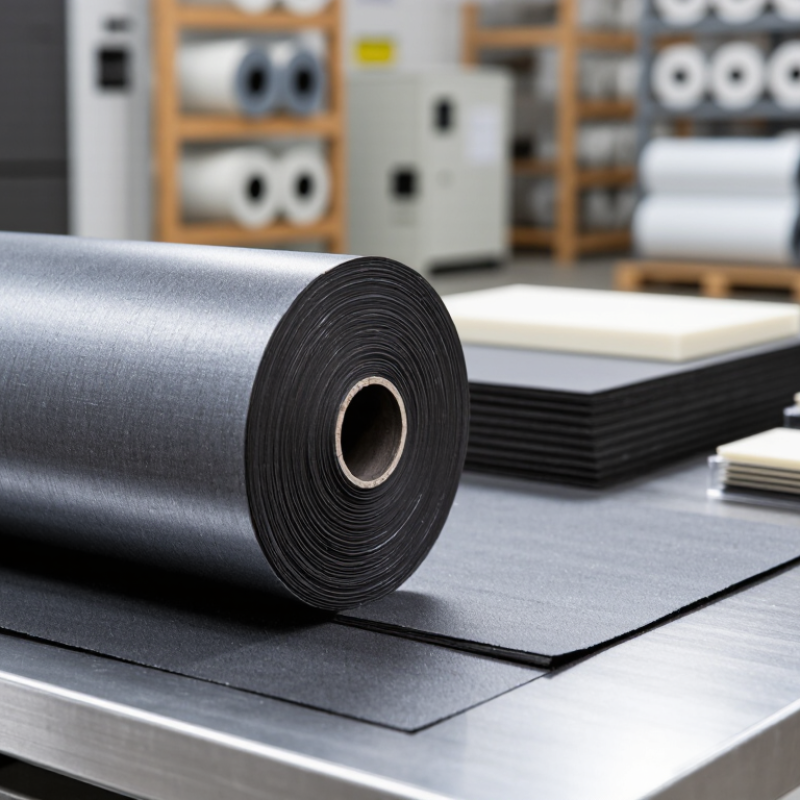
Graphite Insulating Lining Paper: Composition and Key Properties
Top Graphite Insulating Lining Paper Suppliers
Graphite insulating lining paper usually combines expanded graphite, mineral fibers, and a heat-resistant binder. Some grades also contain ceramic fibers or reinforcing pulp. The exact recipe controls flexibility, density, and thermal stability. Graphite improves heat spreading and resists many chemical exposures. However, graphite can conduct electricity. “Insulating” may describe thermal performance, not electrical isolation. This distinction requires careful supplier documentation.
In practical material trials, thickness alone rarely predicts performance. A 1 mm sheet may behave differently from another 1 mm sheet. Check bulk density, ash content, thermal conductivity, compressive strength, and maximum service temperature. Examine the cut edge, too. Loose particles suggest weak bonding. A clean, even surface usually indicates better processing control. Yet visual inspection is not enough. Independent test reports and batch records provide stronger evidence. A recurring mistake is trusting a single temperature rating without checking pressure and atmosphere. Performance can change significantly under load.
Tips:
Request samples from several suppliers. Test them at the intended temperature, pressure, and installation radius. Record thickness before and after heating. Ask whether the binder releases fumes during the first heat cycle. Also, confirm storage conditions, because moisture can affect handling and bonding. No supplier sheet replaces a real application test.
How Graphite Lining Paper Supports Thermal and Electrical Insulation
Top Graphite Insulating Lining Paper Suppliers
How Graphite Lining Paper Supports Thermal and Electrical Insulation
Graphite lining paper manages heat through its thin, layered structure. It spreads hot spots across a wider surface, reducing localized thermal stress around furnaces, batteries, and electrical assemblies. The effect is practical: a liner can shield nearby parts from radiant heat while maintaining a compact design. According to the USGS Mineral Commodity Summaries 2024, global natural graphite production reached about 1.6 million metric tons in 2023. This scale supports broader material availability, but quality still varies between suppliers.
Graphite itself conducts electricity. That detail matters. Electrical insulation usually comes from mica, ceramic fibers, resin binders, or a carefully applied coating around the graphite layer. The International Energy Agency reported in its Global Critical Minerals Outlook 2024 that China supplied over 90% of refined graphite used in battery anodes. This concentration makes traceability and testing important for industrial buyers. Reliable suppliers should provide thickness tolerance, ash content, thermal resistance, dielectric strength, and batch records. Small gaps can cause failures.
Field experience also shows a less convenient truth. A thicker paper does not always insulate better. Compression, moisture, binder breakdown, and surface contact can change performance. Buyers should request testing at the actual operating temperature, pressure, and voltage. One overlooked variable remains installation pressure. It may quietly control the result.
Major Applications of Graphite Insulating Lining Paper
Graphite insulating lining paper serves demanding thermal-management applications. It lines furnace chambers, crucible supports, heat-treatment fixtures, and high-temperature seals. Its layered structure reduces heat loss and shields nearby components from radiant heat. In battery production, graphite-based sheets support electrode processing and thermal buffering around sensitive equipment. The International Energy Agency reported that clean-energy graphite demand could rise several times by 2030, driven mainly by battery anodes. This expands demand for controlled, consistent graphite materials.
Foundries and semiconductor facilities also use flexible graphite paper around molds, heating zones, and vacuum-furnace parts. The U.S. Geological Survey estimated global natural graphite mine production at about 1.6 million metric tons in 2023. That figure highlights the importance of reliable raw-material sourcing for lining-paper suppliers. Buyers should check graphite purity, density, thickness tolerance, ash content, and compression recovery. They should also request test data at the intended temperature, not only room-temperature specifications. A technical detail matters here: graphite conducts electricity. True electrical insulation requires a ceramic, mica, or polymer barrier within the lining system. This is easy to overlook. In practice, some applications need better thermal isolation, while others need electrical separation. Supplier evaluations should therefore compare furnace trials, dimensional stability, and contamination control rather than relying on a product label alone. Performance can vary more than expected.
Criteria for Evaluating Graphite Lining Paper Suppliers
Top Graphite Insulating Lining Paper Suppliers
Criteria for Evaluating Graphite Lining Paper Suppliers
Choosing a graphite lining paper supplier requires more than comparing prices. Product purity, thickness tolerance, thermal stability, and batch consistency should lead the assessment. The U.S. Geological Survey’s Mineral Commodity Summaries 2024 reported global natural graphite mine production of about 1.6 million metric tons in 2023. That scale highlights the need for reliable raw-material traceability, not vague sourcing claims. Ask for certificates showing ash content, fixed carbon, moisture, and particle-size distribution.
Performance data must reflect actual furnace conditions. Request test results for compression recovery, tensile strength, thermal conductivity, and oxidation resistance. ISO-based quality systems help, but they do not replace product-level testing. A supplier should provide samples from multiple production lots. Consistency matters. Compare the sheets after heating, bending, and repeated compression, rather than judging a clean sample alone. The International Energy Agency’s Global Critical Minerals Outlook 2024 also identifies graphite supply chains as highly concentrated, making regional inventory and contingency planning important evaluation points.
A strong supplier explains failure limits clearly. Ask how thickness changes near joints and curved surfaces. Check packaging, storage life, and technical response time. One certificate is not enough. A low ash value can still hide poor handling performance. I would treat every supplier score as provisional until independent testing confirms it. This step is often skipped, and that weakness deserves honest attention.
Comparing Leading Graphite Insulating Lining Paper Suppliers
Comparing Leading Graphite Insulating Lining Paper Suppliers
Choosing among leading graphite insulating lining paper suppliers requires more than comparing prices. In practical furnace work, I examine thermal stability, graphite purity, thickness control, and sheet uniformity. A lining paper may look smooth, yet contain weak edges or inconsistent density. These flaws can appear during cutting and installation.
Reliable suppliers provide clear technical data, including operating temperature, ash content, tensile strength, and dimensional tolerance. They should also offer samples for trial fitting. I normally test a small section near heat zones before approving a larger order. It reveals handling problems early. Packaging matters too. Moisture-resistant wrapping helps prevent curled sheets and surface damage during storage.
Supplier experience becomes visible in small details. Do they answer questions about compression, bonding, and shelf life? Can they explain batch variation without hiding behind generic claims? Strong technical support is valuable when a paper must fit around narrow joints or irregular surfaces. Still, no supplier is perfect. Published figures may come from controlled tests, not a dusty workshop with repeated heating cycles. That difference deserves attention.
The best comparison balances performance, documentation, delivery reliability, and responsive communication. A slightly cheaper sheet may create more waste during trimming. I prefer suppliers that provide traceable batches and realistic recommendations. Independent testing is wise for demanding applications, especially when insulation failure could damage equipment. Small tests help.
Top Graphite Insulating Lining Paper Suppliers - Comparing Leading Graphite Insulating Lining Paper Suppliers
The chart presents typical technical benchmarks used when comparing graphite insulating lining paper suppliers. Values reflect commonly published specification ranges for flexible graphite lining materials rather than individual company data.
Higher carbon content and density generally indicate better material consistency, while lower ash content supports cleaner high-temperature processing. Thermal conductivity and tensile strength should be evaluated together with thickness, operating atmosphere, and application temperature.