What Is Carbon Graphite Foil Used For?
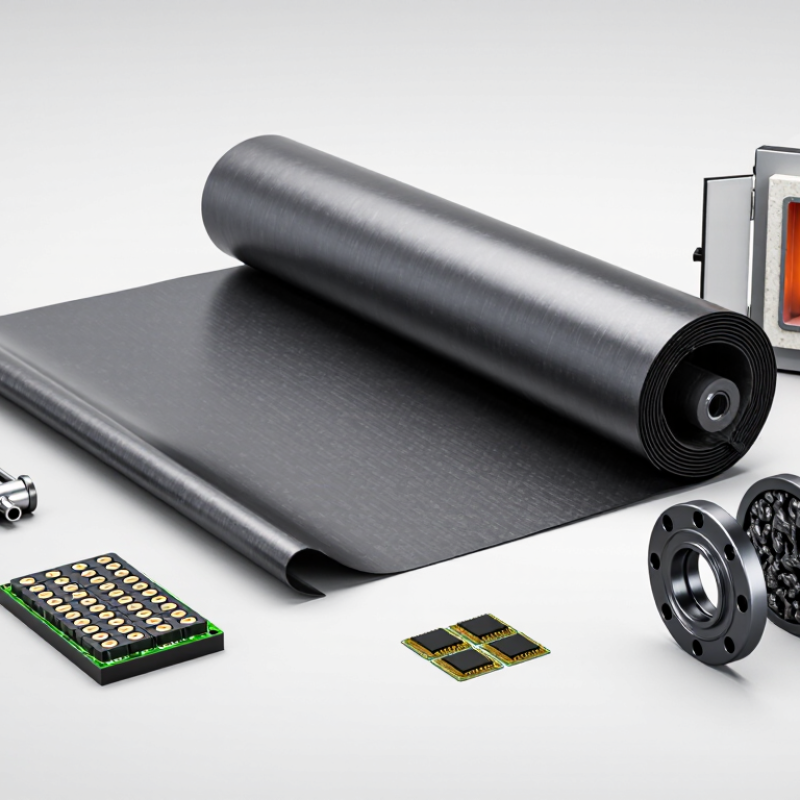
Carbon Graphite Foil is a thin, flexible carbon material built for demanding thermal, electrical, and sealing environments. Its layered graphite structure helps spread heat across uneven surfaces. It can also tolerate repeated compression, vibration, and temperature changes. That combination makes it valuable in battery packs, heat exchangers, furnace equipment, semiconductor tools, and industrial gaskets.
It looks simple. Its performance is not.
Materials scientist Dr. Bor Z. Jang has often emphasized a central carbon-materials principle: “The potential of carbon materials lies in their tunable properties.” That idea explains why Carbon Graphite Foil appears in such different products. Engineers may select it for thermal management, electrical conductivity, chemical resistance, or low-friction sealing. In a battery module, the foil can help distribute heat around cells. In a high-temperature furnace, it may support insulation or protect mating surfaces. In a flange, it can fill microscopic irregularities that rigid metal cannot close effectively.
However, Carbon Graphite Foil is not a universal replacement material. Thickness, density, purity, compression strength, and oxidation resistance can change its real performance. Some grades need protective atmospheres at elevated temperatures. Others may shed particles during cutting or installation. That detail is easy to overlook.
The practical answer depends on the system, not the product name alone. This article examines where Carbon Graphite Foil is used, why engineers choose it, and which limitations deserve closer attention. Some applications are obvious. Others require testing, careful specification, and a willingness to question optimistic supplier claims.
What Is Carbon Graphite Foil?
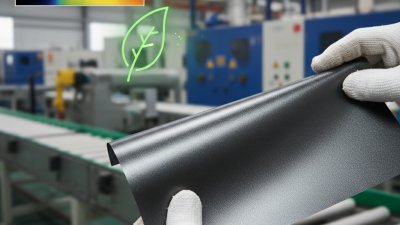
Carbon graphite foil is a thin, flexible sheet made from expanded graphite, commonly natural or synthetic. Manufacturers compress graphite flakes into dense layers without adding much binder. The result feels soft, dark, and slightly metallic, yet it bends around uneven surfaces. Its layered structure explains its unusual performance. It conducts heat and electricity, resists many chemicals, and remains stable at high temperatures. However, performance depends on purity, density, thickness, and the surrounding atmosphere.
In practical engineering, this foil often becomes a sealing or thermal-management material. Cut gaskets can seal flanges, pumps, valves, and heat-processing equipment. Thin pieces can fill small surface gaps, reducing leakage when bolts apply even pressure. Its thermal conductivity helps spread heat across hot spots. Electrical conductivity can also support grounding or shielding designs, but engineers must control contact pressure. For battery and furnace applications, foil may serve as a flexible conductive layer or a protective interface.
I have seen its value most clearly where rigid sheets fail to follow movement. It tolerates vibration better than some brittle materials. Still, it is not a universal replacement. Oxidizing environments can damage graphite at elevated temperatures, and loose particles may contaminate sensitive assemblies. Handling also requires care because thin foil tears easily at sharp corners. Designers should verify test data, compression recovery, and chemical compatibility before specifying it. That step is easy to skip. Maybe that is where many avoidable failures begin.
How Carbon Graphite Foil Is Used for Sealing and Gasketing
Carbon graphite foil, often called flexible graphite foil, is used mainly to seal flanges, valves, pumps, and heat exchangers. Its layered structure compresses into small surface defects, helping prevent gas and liquid leakage. It also tolerates repeated heating and cooling better than many conventional gasket materials. The U.S. Geological Survey’s Mineral Commodity Summaries 2024 reported global graphite mine production of about 1.6 million metric tons in 2023. That supply supports demanding industrial applications, but availability does not guarantee sealing quality.
For gasketing, technicians cut graphite foil into rings, strips, or custom profiles. They place it between clean flange faces and apply controlled bolt loading. Correct compression matters. Too little pressure can create leakage paths, while excessive loading may damage the flange or reduce recovery. Flexible graphite remains effective across wide temperature ranges, yet oxidation in air can limit service near 450°C, depending on grade and exposure time. The material is not magic. That assumption needs checking.
Engineers commonly verify compression, recovery, and creep using methods such as ASTM F36 and ASTM F38. They also review pressure, media compatibility, flange condition, and thermal cycling before selection. In steam systems, chemical processing lines, and exhaust equipment, graphite foil can maintain contact as components expand and contract. However, oxygen-rich service, rapid pressure changes, and poor installation can defeat a good gasket. Field experience shows that surface preparation often matters as much as the foil itself.
Applications in Thermal Management and Electrical Systems
Carbon graphite foil is a thin, flexible material used to move heat and maintain electrical contact. Its strong in-plane thermal conductivity spreads heat away from hot components, while its compressibility helps fill small surface gaps. In battery packs, power electronics, and industrial control cabinets, engineers may place it between a heat source and a metal enclosure. The foil can also tolerate high temperatures and repeated compression better than many polymer-based materials.
Demand is growing with electrification. The International Energy Agency reported that global electric vehicle battery demand reached about 750 GWh in 2023, increasing roughly 40% from the previous year. More battery capacity means tighter thermal control around cells, busbars, and power modules. Graphite foil can distribute heat across a wider area, reducing local hotspots. Still, it does not remove heat by itself. A heat sink, airflow path, or liquid cooling system remains necessary.
In electrical systems, graphite foil supports grounding, shielding, flexible contacts, and sealing around conductive joints. Its electrical conductivity helps maintain contact where vibration or thermal cycling could create resistance. The International Energy Agency also recorded nearly 14 million electric car sales in 2023, showing the scale of these reliability requirements. Installation details matter. Uneven pressure can reduce contact quality, and contamination may increase resistance. A practical mistake is treating every foil grade as interchangeable. Thickness, density, anisotropic conductivity, oxidation resistance, and compression recovery should be tested for the actual operating environment. That limitation is easy to overlook.
This chart uses representative flexible graphite foil properties: an in-plane thermal conductivity of 250 W/m·K and an electrical resistivity of 10 μΩ·m. Thermal resistance is calculated as thickness ÷ thermal conductivity, while sheet resistance is calculated as electrical resistivity ÷ thickness. Lower values indicate better heat transfer or electrical conduction.
Factors for Selecting the Right Graphite Foil Product
Carbon graphite foil is a thin, flexible material used in high-temperature gaskets, furnace insulation, seals, and heat-spreading components. Its value comes from chemical resistance, low thermal expansion, and stable performance. Yet foil is not universally durable. Oxidation can weaken it in air at elevated temperatures.
Temperature and atmosphere should guide product selection. For vacuum or inert service, standard flexible foil may perform well. Air exposure requires oxidation-resistant treatment or protective design. Check continuous and peak temperatures, not only the equipment rating. Thickness controls compression, handling, and thermal transfer. A 0.05 mm sheet bends easily, while thicker grades better fill uneven flanges. Density also matters. Higher density usually improves sealing but reduces compressibility.
Review purity, ash content, and chemical compatibility before ordering. Acid, alkali, chloride, and molten-metal environments can react differently. Ask for test data, dimensional tolerances, and traceable certificates. Cutting trials reveal fraying, dust, and springback before production. Small details matter. A common mistake is choosing the thinnest foil to reduce cost. That choice can increase leakage or installation damage. Compare service life, replacement access, and total downtime. No selection method is perfect; field conditions often expose hidden assumptions.