How to Choose Flexible Graphite Sheet in 2026?

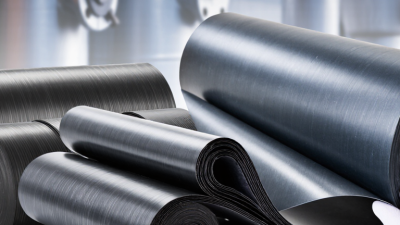
Choosing a Flexible Graphite Sheet in 2026 requires more than comparing thickness and price. The right material must survive the real operating environment.

Dr. Yury Gogotsi, a widely recognized carbon-materials researcher, offers a useful reminder: “Structure determines performance.” That principle matters here. Graphite purity, flake structure, density, and expansion treatment can change sealing behavior significantly. A sheet that performs well on a laboratory bench may compress unevenly inside a heated flange.

Start with the failure risk. Will the sheet face steam, hydrocarbons, corrosive chemicals, vibration, or repeated thermal cycling? Check the required temperature range, compressibility, recovery, tensile strength, and oxidation resistance. These details often matter more than a bold marketing claim.

Look closely at the application.

For valve packing, flexibility and recovery are critical. For heat exchangers, dimensional stability and chemical resistance may matter more. For exhaust systems, oxidation control deserves special attention. Reinforced graphite sheets can improve handling, but reinforcement may reduce conformability around rough surfaces.

Reliable selection also depends on evidence. Request certificates, test methods, density data, and batch traceability. Compare actual service conditions with test conditions. They are not always equal.

A small gap can become a leak.

One practical mistake is choosing the thickest sheet for extra security. Thickness alone does not guarantee better sealing. Excessive compression can damage flanges or create installation problems. I would also question any supplier offering universal performance without limitations. Materials have trade-offs.

This guide explains how to evaluate Flexible Graphite Sheet options in 2026, while acknowledging an uncomfortable truth: perfect data is rare. Careful testing, documented assumptions, and engineering judgment still matter.
How to Choose Flexible Graphite Sheet in 2026?

Define Service Conditions: Temperature −200–3000°C and Oxidation Limits Near 450°C

How to Choose Flexible Graphite Sheet in 2026?

Flexible graphite sheet selection begins with the real service environment, not a catalog temperature. A specification of −200°C to 3000°C sounds impressive, but it needs careful interpretation. At cryogenic temperatures, thermal contraction can loosen a seal or increase stress around bolts. At extreme heat, graphite may perform well only in vacuum or inert gas. Air changes the situation completely.

Near 450°C, oxidation becomes a serious design limit. The exact boundary is rarely neat. Oxygen concentration, exposure time, airflow, pressure, and sheet purity all influence material loss. A sheet exposed briefly to low oxygen may survive, while continuous air contact can damage it much earlier. Do not treat 450°C as a universal operating temperature.

Check the atmosphere first. Then examine temperature cycling, compression load, flange movement, and media compatibility. A thicker sheet is not automatically safer; it may compress differently and affect bolt loading.

In practical seal reviews, oxidation protection often receives less attention than maximum temperature. That is a costly oversight. Ask for test conditions, not only a headline rating.

If the supplier cannot explain atmosphere, duration, and mass-loss data, the selection remains uncertain. I would also question any claim covering the full −200°C to 3000°C range without separate limits for vacuum, inert gas, and air. Real service is usually less tidy.

Compare Graphite Grades by Density: 0.7–1.2 g/cm³ for Sealing Applications

How to Choose Flexible Graphite Sheet in 2026?

Flexible graphite density strongly affects sealing behavior. In practical gasket work, 0.7 g/cm³ sheets compress easily under moderate bolt loads. They can conform to small flange irregularities. This helps on older equipment. However, lower-density graphite may tear during cutting or installation. It may also lose thickness under repeated thermal cycles. It compresses easily. Handle it carefully.

A 0.9–1.0 g/cm³ grade often provides a useful balance. It offers better handling, moderate compressibility, and improved dimensional stability. For high-load flanges or demanding temperature changes, 1.1–1.2 g/cm³ graphite usually gives greater mechanical strength. It can resist extrusion more effectively. Yet higher density is not automatically better. A rigid sheet may need greater bolt stress to seal rough surfaces. I have seen specifications chosen by density alone, then revised after leakage testing.

Check the flange surface, bolt capacity, sheet thickness, and operating medium together. A smooth, rigid flange may suit a denser grade. A slightly uneven joint may require more conformable graphite. Review compression, recovery, creep, and oxidation data from the supplier. Test the actual thickness under the available installation load. Density values can vary across production lots, so request verified certificates when consistency matters. A small installation trial is often worth the delay. Temperature cycling can reveal weaknesses that room-temperature inspection misses. Track bolt torque and sheet thickness before and after testing. That record supports a more reliable 2026 specification.

How to Choose Flexible Graphite Sheet in 2026?

Compare graphite grades by density for sealing applications

How to read the chart: Flexible graphite sheet density commonly ranges from approximately 0.7 to 1.2 g/cm³. Lower-density grades are generally more compressible and conformable, which can help seal uneven or flanged surfaces. Higher-density grades typically provide greater material compactness and improved resistance to extrusion under higher compressive loads.

Selection guidance: For irregular flange surfaces and lower-load sealing, consider the 0.7–0.9 g/cm³ range. For high-load, high-pressure, or dimensional-stability requirements, consider approximately 1.0–1.2 g/cm³, subject to the gasket design, temperature, media compatibility, and available bolt load.

The plotted values represent representative nominal density grades used for flexible graphite sheet comparison. Actual density, compressibility, recovery, and leakage performance vary by material construction and test method.

Check Sealing Performance Using ASTM F36 Compressibility and Recovery Data

How to Choose Flexible Graphite Sheet in 2026?

When selecting flexible graphite sheet, start with ASTM F36 compressibility and recovery data. These values show how the sheet responds under controlled compression and release. Compressibility indicates how well the material conforms to flange irregularities. Recovery shows how much thickness returns after the load is removed.

Compare results only when test conditions match. Thickness, density, loading force, temperature, and test direction can change the figures. A sheet with higher compressibility may seal a rough flange more easily. However, excessive compression can reduce thickness and disturb bolt-load control. A high number is not automatically better.

Recovery matters during thermal cycling and pressure changes. Materials with useful recovery can maintain contact when flanges separate slightly. This is especially important for equipment exposed to vibration or repeated heating. Ask for complete ASTM F36 results, not isolated percentages. Check the test date, sample thickness, and production lot.

Do not rely on the datasheet alone. Measure flange flatness, bolt condition, media compatibility, and operating temperature. In field inspections, uneven compression often explains leakage better than the graphite grade itself. I have seen selection decisions focus too heavily on recovery. That assumption can mislead. ASTM F36 is a valuable comparison tool, but it does not reproduce every service condition. Trial installation and controlled leak testing may still reveal weaknesses before full production use.

How to Choose Flexible Graphite Sheet in 2026? - Check Sealing Performance Using ASTM F36 Compressibility and Recovery Data
Flexible Graphite Sheet Type Typical Density
(g/cm³)
Common Thickness
(mm)
ASTM F36 Compressibility
(% typical range)
ASTM F36 Recovery
(% typical range)
Temperature Capability in Inert or Reducing Service
(°C)
Relative Conformability Recommended Sealing Use Selection Comment
Standard flexible graphite sheet 0.70–1.10 0.38–3.20 30–45 10–20 Up to approximately 3,000 High Flanges with minor surface irregularities, pipe flanges, heat exchangers and general industrial service Good starting point when surface conformity and easy cutting are more important than maximum mechanical strength.
High-density flexible graphite sheet 1.20–1.80 0.38–3.20 15–30 12–25 Up to approximately 3,000 Medium High-pressure flange joints, narrow sealing lands and applications requiring lower material loss under load Typically needs a flatter, cleaner flange because lower compressibility reduces the ability to fill large surface defects.
Expanded graphite sheet with metallic reinforcement 1.00–1.60 0.80–3.20 20–35 10–20 Up to approximately 450 in oxidizing service; higher in non-oxidizing service Medium–High Steam, hot oil, thermal cycling and joints where handling strength or blowout resistance is important The reinforcement improves dimensional stability and handling, but can reduce conformability compared with an unreinforced sheet.
Graphite sheet with corrosion-inhibiting treatment 0.80–1.50 0.38–3.20 25–40 10–22 Application-dependent; verify treatment limits High Flanges where galvanic or chemical interaction with adjacent metal surfaces is a concern Confirm compatibility of the treatment with the process fluid, temperature and adjacent flange materials.
Low-permeability laminated graphite sheet 1.00–1.70 0.80–3.20 20–35 12–22 Service-specific; verify oxidation limit Medium Gas service and joints where reduced fluid migration through the sheet is required Use the manufacturer’s permeability and sealability data in addition to ASTM F36 results.
Flexible graphite sheet with adhesive backing 0.70–1.30 0.38–1.60 25–45 10–20 Limited by the adhesive system High Temporary positioning, low-pressure covers and irregular non-flange components Do not use the graphite temperature rating alone; the adhesive may have a substantially lower operating limit.
How to read the ASTM F36 results: Higher compressibility generally improves contact with minor flange imperfections, while higher recovery indicates better resilience after unloading. ASTM F36 values are strongly affected by density, thickness, loading rate, applied pressure and test conditioning. The ranges above are typical engineering screening ranges for flexible graphite sheet and are not a substitute for lot-specific test certificates or a joint design calculation.
Important service limitation: Flexible graphite can oxidize at elevated temperatures in air or other oxidizing environments. The stated high-temperature capability primarily applies to inert, vacuum or reducing service. Always verify oxidation resistance, media compatibility, flange load, surface finish, bolt load and the required leakage class before final selection.

Match Thickness, Reinforcement, and Pressure Ratings to Flange Requirements

How to Choose Flexible Graphite Sheet in 2026?

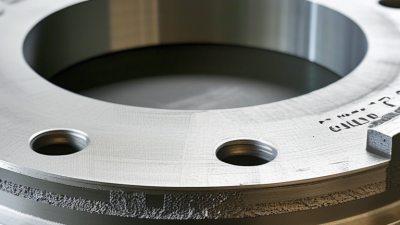
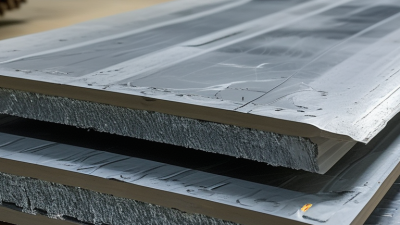
Flexible graphite sheet selection begins with the flange, not the catalog. Measure the flange gap, bolt load, surface finish, and operating temperature. For standard raised-face flanges, 0.8–1.5 mm sheet often balances conformity and blowout resistance. Thicker material can fill scratches. It also needs higher compression.

Match the sheet to pressure class and assembly control. ASME B16.5-2022 assigns flange pressure ratings by material, temperature, and class; gasket selection cannot increase that rating. ASME PCC-1-2022 also stresses controlled bolt tightening because uneven load creates leakage paths. For higher-pressure service, choose tanged or expanded-metal reinforcement after checking compression and recovery data under EN 13555. Reinforcement helps handling and extrusion resistance. It does not repair poor alignment.

Field experience shows that 1.0 mm graphite may seal a clean, rigid flange, while 1.5 mm performs better on moderate surface damage. Vacuum service needs separate leakage testing. ASTM F37 methods can compare gasket leakage, but reported values depend heavily on test pressure and seating stress. Ask for actual test conditions. “Low leakage” is incomplete evidence. I would also review ASTM F36 compressibility and ASTM F38 recovery results, though laboratory values never perfectly predict aged plant hardware. That gap deserves attention.

Validate EN 13555, ASTM F104, Purity, and Supplier Quality Documentation

How to Choose Flexible Graphite Sheet in 2026?

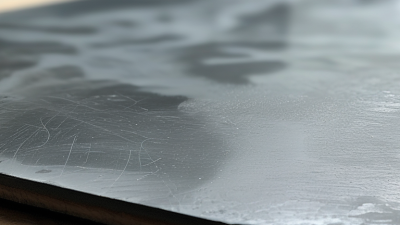
A flexible graphite sheet should be judged by evidence, not appearance. A smooth black surface proves very little. Request the exact material grade, thickness tolerance, density, compressibility, recovery, and maximum service temperature. These details should match your flange design and operating conditions.

Ask whether the supplier has tested the sheet under EN 13555. Review leakage, compression, recovery, and stress-relaxation data at relevant temperatures and pressures. Do not accept a generic certificate without test conditions. ASTM F104 can help classify nonmetallic gasket materials, but it is not a complete application approval. Check the stated type, style, construction, and test references carefully.

Purity requires equal attention. Request carbon content, ash percentage, chloride level, sulfur level, and expanded graphite information when applicable. A low ash value may matter greatly in chemical or high-temperature service. Compare the certificate with the purchase lot, not only the product brochure. The report should show batch numbers, test dates, methods, and authorized signatures. Supplier quality documentation should include a certificate of analysis, traceability records, dimensional inspection results, and a current quality-management certificate.

I have seen clean-looking documentation miss thickness variation. That mistake is easy to overlook. Ask for retained samples and independent testing when failure would be costly. Supplier answers should be specific, consistent, and technically honest. A careful qualification process may feel slow, but an attractive sheet without traceable data is only an assumption.