What Is Flexible Graphite and What Is It Used For?

Flexible Graphite is a thin, adaptable carbon material made by expanding natural graphite and compressing it into sheets, foils, or formed parts. The process creates a layered structure that bends around uneven surfaces while maintaining useful sealing properties. Unlike ordinary graphite blocks, it can conform to flange imperfections and narrow gaps. This makes it valuable in demanding industrial environments.

It can tolerate high temperatures, resist many chemicals, and conduct heat and electricity. These characteristics support its use in gaskets, valve packing, heat spreaders, battery components, and furnace insulation. A graphite gasket may appear simple, yet its performance depends on compression, surface finish, thickness, purity, and operating conditions. That distinction matters. Poor installation can still cause leakage, even when the material is correctly selected.

Engineers often choose Flexible Graphite for steam systems, pumps, exhaust equipment, and chemical processing lines. However, it is not a universal solution. Not every application is suitable. Oxidizing atmospheres, excessive pressure, or mechanical damage may reduce its service life. Manufacturers and maintenance teams should review technical data, temperature limits, reinforcement options, and relevant industry standards before making a decision.

This guide examines what Flexible Graphite is, how it is produced, and why its layered structure matters. It also considers practical uses, performance advantages, and limitations. Some claims about graphite sound impressive. Real-world results require verification. Careful selection remains essential.
What Is Flexible Graphite and What Is It Used For?

What Flexible Graphite Is and How It Is Made

Flexible graphite begins with natural flake graphite, a mineral formed from tightly bonded carbon layers. Those layers slide easily, giving graphite its useful flexibility and heat resistance. Manufacturers usually clean and size the flakes before chemical treatment. Intercalation agents enter between the layers and create expanded graphite after rapid heating.

The process sounds simple, but it is not. Heating causes each flake to swell into a worm-like structure, sometimes many times its original thickness. The expanded material is then compressed through rollers or presses. This creates dense sheets, foils, or formed rings. Most flexible graphite products use no traditional binder. That feature helps preserve conductivity and chemical resistance, but it also demands careful control during production.

In practical fabrication, technicians check thickness, density, ash content, compression recovery, and gas permeability. These properties affect whether a sheet performs well around valves, pumps, flanges, or high-temperature equipment. Flexible graphite is also used for thermal interfaces, furnace components, and selected electrical applications. It tolerates heat and many corrosive environments, although oxygen-rich conditions can limit its service temperature. A small manufacturing error can change sealing behavior. I would not treat every sheet as identical. Over-compressing it may reduce recovery, while poor expansion can leave weak, uneven areas. Testing under actual pressure and temperature remains important.

Key Properties of Flexible Graphite

Flexible graphite is made by expanding natural graphite flakes and pressing them into sheets, tapes, or formed rings. The process creates a dense, layered material without adding traditional binders. It feels soft. Yet its structure can tolerate pressure, vibration, and uneven mating surfaces.

Its most valuable property is conformability. Under compression, the layers flow into small scratches and gaps, helping create a reliable seal around pipes, valves, and heat-transfer equipment.

Flexible graphite also conducts heat and electricity, although performance depends on density, purity, and the direction of measurement. Its layered structure gives it low friction and strong resistance to many chemicals.

This makes it useful for gaskets, packing, thermal barriers, and electrically conductive components.

Temperature behavior requires careful judgment. Flexible graphite performs well across wide temperature changes, but oxidation can become a concern in air at elevated temperatures. An engineer should check the actual atmosphere, pressure, bolt load, and exposure time instead of trusting a general temperature claim. I have seen material choices fail when designers considered temperature alone. It is not universal. Moisture, handling damage, and excessive compression can also reduce performance. Testing a small sample under real operating conditions often reveals weaknesses that a datasheet cannot show.

Main Types and Forms of Flexible Graphite

What Is Flexible Graphite and What Is It Used For?

Main Types and Forms of Flexible Graphite

Flexible graphite begins as natural flake graphite. Manufacturers expand the flakes with controlled heat, then compress them into dense sheets. The result is a soft, dark material that bends without ordinary rubber binders. It tolerates high temperatures and conducts heat and electricity. However, performance changes with density, purity, and compression.

The main types include expanded graphite, flexible graphite sheet, graphite foil, and laminated graphite. Expanded graphite is loose and porous. It is useful for packing materials and absorbent structures.

Flexible graphite sheets are compressed and commonly used for pipe gaskets, valve seals, and heat barriers. Thin graphite foil fits narrow spaces and handles uneven surfaces.

Laminated forms add support, such as metal mesh or adhesive layers. Braided graphite packing is another practical form for rotating shafts and industrial valves.

Tips: Match the form to the pressure, temperature, and movement. Check whether oxygen is present at high temperatures, because graphite can oxidize. Measure flange roughness and bolt loading before choosing a gasket. A thicker sheet is not always safer. Sometimes, it seals worse. Selection can be less tidy than technical charts suggest, especially when surfaces are damaged or poorly aligned. Test a small section when the service conditions are unusual.

Industrial Applications of Flexible Graphite

What Is Flexible Graphite and What Is It Used For?

Flexible graphite is produced by expanding natural flake graphite and compressing it without conventional binders. The result is a thin, conformable material with strong chemical resistance and excellent sealing performance. It can fill uneven flange surfaces, even under repeated heating and cooling. USGS Mineral Commodity Summaries 2024 reported global natural graphite production of approximately 1.6 million metric tons in 2023. This supply supports growing industrial demand, although quality and flake structure vary between sources.

Industrial applications of flexible graphite include gaskets, valve packing, pump seals, and heat-exchanger components. Chemical processing plants use it where corrosive fluids challenge elastomeric seals. Power-generation equipment also uses graphite components around steam lines and high-temperature joints. In furnaces, flexible graphite can serve as insulation or a thermal barrier. The International Energy Agency’s Global Critical Minerals Outlook 2024 identifies graphite as important for clean-energy supply chains, especially batteries. However, industrial sealing remains a practical and established application. The material is not universally superior. Oxidation can reduce performance in hot, oxygen-rich environments, and installation errors may cause leakage. In practice, specifications can be messier than product sheets suggest.

Tips: Check temperature, pressure, chemical exposure, and oxygen conditions before choosing a grade. Confirm compression, recovery, and thickness with test data. Keep sheets clean, flat, and dry during storage. Small details matter.

What Is Flexible Graphite and What Is It Used For? - Industrial Applications of Flexible Graphite

Data Dimension Typical Information Industrial Significance Common Applications
Material Definition Flexible graphite is produced by expanding natural graphite flakes and compressing them into sheets, rolls, foils, tapes, or formed components without adding a conventional elastomeric binder. Its layered structure allows the material to conform to uneven surfaces while retaining graphite’s thermal and chemical resistance. Gaskets, packing, sealing tapes, heat shields, and formed sealing parts.
Primary Composition Typically more than 95% carbon; high-purity grades may contain approximately 99% carbon or more. Higher carbon content generally supports improved chemical stability, thermal performance, and electrical conductivity. High-temperature seals, chemical-process equipment, and electrical or thermal management components.
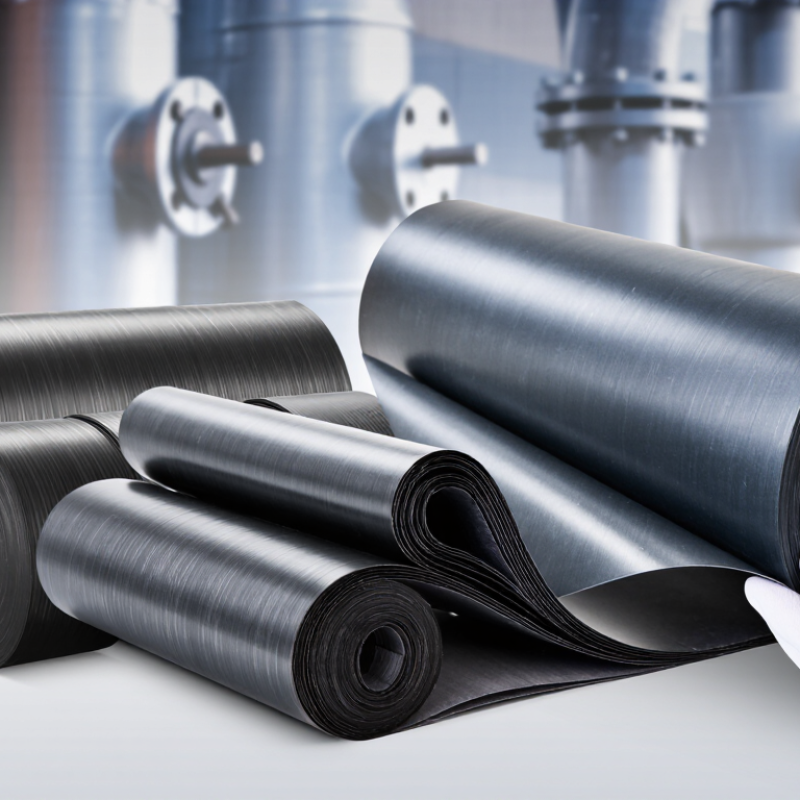
Appearance and Forms Dark gray to black material supplied as flexible sheets, rolls, laminated sheets, corrugated tape, braided packing, or molded rings. The available forms make it possible to select a product according to pressure, geometry, installation method, and sealing requirements. Flange gaskets, valve packing, pump packing, pipe-sealing tape, and custom die-cut components.
Temperature Capability Can provide service at very high temperatures in non-oxidizing or low-oxygen environments. Oxidation resistance becomes the limiting factor in air, especially at elevated temperatures. Flexible graphite is suitable for many high-temperature duties, but exposure conditions must be evaluated because graphite can oxidize in air. Furnaces, heat-treatment equipment, hot flanges, exhaust systems, and high-temperature valves.
Chemical Resistance Generally resistant to many acids, alkalis, salts, and organic substances; compatibility depends on the specific chemical, concentration, temperature, and oxidizing conditions. It can maintain sealing performance in demanding process environments where many polymeric materials degrade. Chemical plants, refineries, tanks, reactors, pipelines, and process pumps.
Compressibility and Conformability Soft, compressible, and capable of conforming to minor surface irregularities. Performance depends on density, thickness, reinforcement, and compression load. Helps create reliable seals on flanges and equipment surfaces that are not perfectly smooth or flat. Flange gaskets, heat exchangers, manways, bonnet seals, and pipe connections.
Elastic Recovery Lower elastic recovery than many rubber-based sealing materials; reinforced or laminated constructions are used where mechanical stability is important. Joint design, bolt load, surface finish, and thermal cycling must be considered to reduce leakage risk. Static gaskets, valve bonnets, pump casings, and equipment covers.
Thermal Conductivity Graphite has relatively high in-plane thermal conductivity, although the actual value varies with density, grade, orientation, and manufacturing process. It can spread heat and reduce localized hot spots in selected thermal-management applications. Heat spreaders, furnace components, thermal barriers, and high-temperature processing equipment.
Electrical Conductivity Conductive because of its graphitic carbon structure; electrical resistance varies with density, thickness, orientation, and purity. Allows flexible graphite to serve both as a sealing material and as a conductive or electrically dissipative component. Grounding interfaces, conductive seals, electromagnetic shielding structures, and battery-related components.
Friction and Lubricity Graphite’s layered crystal structure provides natural lubricity and low-shear behavior under suitable operating conditions. Reduces friction and wear in some packing and sliding-contact applications without relying solely on liquid lubricants. Valve stems, pump shafts, rotating equipment packing, and high-temperature mechanical seals.
Automotive and Transportation Used where sealing materials must tolerate heat, vibration, pressure fluctuations, and exposure to fuels or lubricants. Provides durable sealing in locations where conventional elastomers may lose strength or harden. Exhaust-manifold gaskets, turbocharger components, engine seals, and high-temperature exhaust joints.
Chemical and Petrochemical Processing Applied to equipment handling corrosive fluids, hydrocarbons, solvents, steam, and high-temperature process media. Its chemical resistance and broad temperature capability support reliable static and dynamic sealing. Flanges, reactors, heat exchangers, pumps, valves, storage tanks, and pipeline connections.
Power Generation Used in steam, hot-water, boiler, turbine, and high-temperature auxiliary systems. Supports sealing reliability during thermal cycling and maintenance intervals when correctly compressed and installed. Steam valves, turbine casings, boiler inspection covers, pipe flanges, and pump packing.
Industrial Furnaces Used as sheets, tapes, packing, or custom parts around high-temperature doors, flanges, heating zones, and insulation assemblies. Maintains flexibility and dimensional conformity where ordinary organic sealing materials would deteriorate. Furnace doors, kiln seals, heat-treatment equipment, and high-temperature access covers.
Aerospace and Specialized Equipment Selected for lightweight, high-temperature, conductive, and chemically stable components when the design permits graphite exposure. Can combine sealing, thermal-management, and electrical-conductivity functions in a single material family. Thermal barriers, exhaust-related parts, high-temperature seals, and specialized instrumentation assemblies.
Main Advantages High-temperature capability, chemical resistance, conformability, low friction, electrical conductivity, and long-term stability in suitable environments. These characteristics make it useful where polymeric, metallic, or fiber-based materials cannot meet the complete operating requirement. High-performance gaskets, packing, thermal components, and conductive sealing systems.
Important Limitations May oxidize in air at high temperature, can be damaged by aggressive oxidizing chemicals, and may require reinforcement where tensile strength or handling strength is critical. Material selection must account for oxygen exposure, chemical compatibility, pressure, temperature cycling, flange condition, and required compression. Design review for oxidizing services, reinforced gasket construction, protective coatings, and controlled installation procedures.
Environmental and Safety Considerations Dust control, clean handling, correct storage, and appropriate personal protective equipment are important during cutting, machining, and installation. Good handling practices help minimize airborne particles, contamination, installation damage, and premature seal failure. Manufacturing facilities, maintenance workshops, chemical plants, power stations, and high-temperature processing sites.

Factors for Selecting Flexible Graphite Products

Flexible graphite is made by expanding and compressing natural graphite flakes. It forms a soft, conformable sheet without traditional binders. The material withstands high temperatures, seals irregular surfaces, and conducts heat and electricity. Common uses include gaskets, valve packing, heat shields, and exhaust seals.

Selection should begin with service conditions, not sheet thickness alone. Check operating temperature, pressure, media, flange design, and expected bolt load. Oxidizing environments need special attention because graphite can oxidize in air at elevated temperatures. For steam, hydrocarbons, or chemicals, confirm compatibility through technical data and testing. Density matters. Higher-density grades usually resist creep better, while lower-density sheets conform more easily to rough flanges. It is a trade-off.

Compression and recovery also deserve measurement. A gasket may look excellent during installation, then relax after repeated heating. Ask for test values covering compressibility, recovery, leakage, and thickness tolerance. Inspect rolls for tears, hard spots, waviness, and contamination. Small defects can become leak paths.

Practical fitting experience shows that surface preparation changes results dramatically. Clean the flange, control bolt tightening, and avoid over-compressing the sheet. A simple hardness check helps, but it is not enough. Selection is rarely perfect on the first pass. Reviewing field temperature records and failed seals can reveal more than a catalog table.