What Are the Top Types of Flexible Graphite?
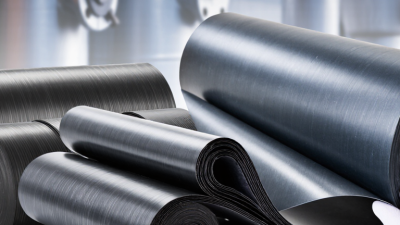
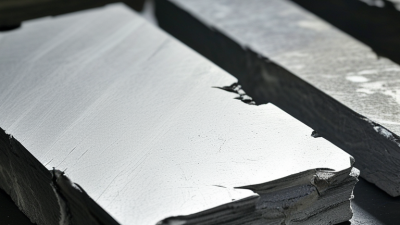
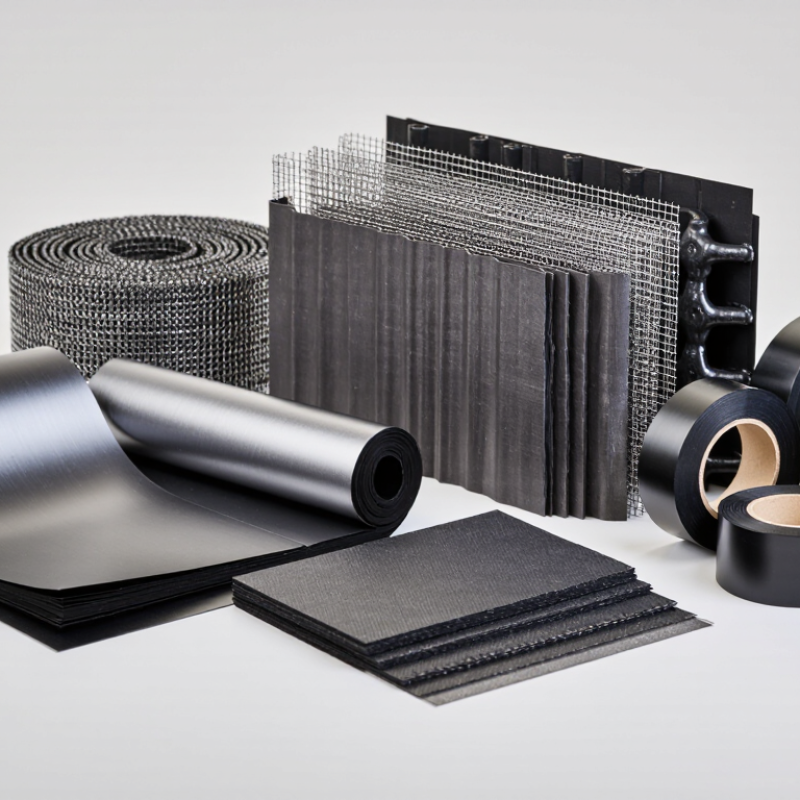
Flexible Graphite is a family of engineered carbon materials, not a single product grade. Manufacturers produce it from natural or synthetic graphite through exfoliation, compression, coating, or reinforcement. The result can appear as thin foil, gasket sheet, paper, tape, braided packing, or laminated composite.
Market demand reflects this range of applications. The U.S. Geological Survey’s Mineral Commodity Summaries 2025 estimates global natural graphite mine production at approximately 1.6 million metric tons in 2024. The International Energy Agency also identifies graphite as a critical material for clean-energy supply chains. These reports describe upstream graphite demand, rather than flexible products alone. Still, they show why consistent purity and reliable sourcing matter. Material selection remains application-specific.
The main types include expanded graphite foil, flexible graphite sheet, graphite paper, graphite tape, and reinforced flexible graphite. Expanded graphite foil suits valve stems and flange gaskets because it compresses around uneven surfaces. Graphite paper offers a lighter structure for thermal interfaces and electrical components. Graphite tape provides quick sealing around pipes, pumps, and irregular joints. Reinforced grades add stainless-steel, carbon, or textile layers for greater handling strength.
Performance depends on density, carbon purity, compressibility, oxidation resistance, and reinforcement design. ASTM F104 and ASTM F152 are commonly referenced when evaluating gasket materials and sealing performance. However, product names are not always standardized across suppliers. This creates confusion. A careful comparison should examine test methods, temperature limits, pressure ratings, and actual service conditions. The following guide explains the leading flexible graphite types and where each one performs best.
## Expanded Graphite
Expanded graphite is a key type of flexible graphite, produced by treating natural graphite with intercalation chemicals and controlled heat. The particles expand into lightweight, worm-like structures. These structures can be compressed into sheets, tapes, rings, and molded seals without adding binders. The material remains electrically conductive and handles high temperatures, often above 500°C in air-free conditions. Performance depends heavily on flake quality, expansion ratio, density, and forming pressure.
The International Energy Agency reported that graphite demand reached about 1.5 million tonnes in 2023, with clean-energy applications driving much of the growth. The U.S. Geological Survey estimated global natural graphite mine production at roughly 1.6 million tonnes that year. These figures matter because flexible graphite quality begins with a stable graphite supply. In practical testing, a properly compressed sheet should recover after loading, resist leakage, and maintain thickness around a flange. Small differences matter. Expanded graphite is not automatically better at every density. Higher expansion can improve compressibility, yet it may reduce mechanical strength and handling stability. That trade-off is easy to underestimate. Engineers should compare recovery, oxidation resistance, permeability, and thickness loss using the same test conditions. Sources: International Energy Agency, Global Critical Minerals Outlook 2024; U.S. Geological Survey, Mineral Commodity Summaries 2024.
## Flexible Graphite Foil and Sheets
Flexible Graphite Foil and Sheets
Flexible graphite foil is made from expanded graphite flakes, compressed into thin, dense rolls. It remains pliable while tolerating high temperatures, vibration, and chemical exposure. Typical foil thickness ranges from 0.05 to 1.5 millimeters. Thinner grades suit heat shields, battery components, and precision seals. Thicker sheets provide better handling and greater compression recovery. A 2024 Grand View Research assessment estimated the global flexible graphite market at more than USD 1 billion. It also projected steady growth through 2030, supported by sealing, energy, and thermal-management applications.
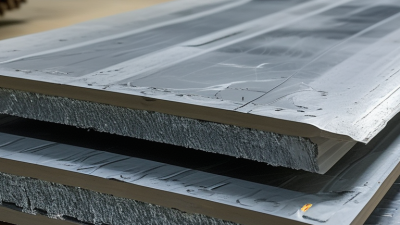
Sheets often include reinforcement, such as metallic mesh or expanded metal. This structure improves tear resistance during installation. It also helps maintain sealing performance across uneven flange surfaces. Technical selection should consider density, carbon purity, compressibility, recovery, and service temperature. ASTM F36 and ASTM F38 methods are commonly used for evaluating gasket compression and leakage behavior. These tests are useful, but they cannot reproduce every field condition. Real equipment includes bolt scatter, surface damage, and thermal cycling. That assumption needs checking.
Industry forecasts differ. MarketsandMarkets has reported a flexible graphite market growth rate near 6% annually in recent assessments. The variation reflects different definitions of foil, sheets, and finished gasket products. Engineers should request batch certificates and test results before specifying a grade. A clean cut edge matters. Poor handling can create graphite dust and reduce dimensional accuracy. In practice, the best sheet is not always the densest one; excessive density may reduce conformability on rough flanges.
What Are the Top Types of Flexible Graphite? - Flexible Graphite Foil and Sheets
| Flexible Graphite Type |
Basic Structure |
Common Thickness |
Typical Density |
Key Characteristics |
Typical Applications |
| Standard Flexible Graphite Foil |
Compressed exfoliated natural graphite with no primary reinforcement |
0.05–1.5 mm |
0.7–1.2 g/cm³ |
Excellent conformability, low compressibility, good chemical resistance, and high in-plane thermal conductivity |
Gaskets, packing rings, thermal interfaces, seals, and electrical insulation components |
| High-Density Graphite Foil |
Highly compressed exfoliated graphite with reduced porosity |
0.05–1.0 mm |
1.0–1.8 g/cm³ |
Improved sealing performance, lower gas permeability, and better dimensional stability than lower-density foil |
High-pressure flanges, valve packing, heat exchangers, and demanding static seals |
| Laminated Graphite Sheet |
Two or more flexible graphite layers bonded or mechanically combined |
0.8–3.0 mm |
0.8–1.6 g/cm³ |
Greater thickness, handling strength, and sealing resilience; maximum temperature depends on the bonding method |
Large gaskets, pipe flanges, pump casings, and equipment maintenance sheets |
| Metal-Reinforced Graphite Sheet |
Flexible graphite combined with tanged metal, perforated metal, or wire mesh reinforcement |
1.0–4.0 mm |
1.0–2.0 g/cm³ |
Higher tensile strength, improved blowout resistance, and better handling during installation |
Pipe-flange gaskets, pressure vessels, boilers, and industrial process equipment |
| Expanded Graphite Sheet |
Exfoliated graphite compressed into a sheet with a highly layered, flexible structure |
0.3–3.0 mm |
0.5–1.5 g/cm³ |
Excellent flexibility, chemical resistance, thermal stability, and recovery after compression |
Sealing sheets, die-cut gaskets, packing materials, and thermal management parts |
| Graphite Foil with Surface Treatment |
Flexible graphite foil with a facing, coating, or treatment to modify surface friction, handling, or sealing behavior |
0.2–2.0 mm |
0.8–1.8 g/cm³ |
Improved surface durability or easier installation; coating temperature limits must be checked separately |
Automotive gaskets, industrial seals, heat shields, and applications requiring reduced particle shedding |
Notes: Thickness and density ranges are representative industry ranges and vary by manufacturing process and grade. Flexible graphite can withstand very high temperatures in inert or reducing atmospheres, but oxidation in air can begin at approximately 400–500°C. Actual service limits depend on pressure, atmosphere, compression, reinforcement, and any coating or binder.
## Flexible Graphite Tape
Flexible Graphite Tape
Flexible graphite tape is a practical sealing material for flanges, valve stems, furnace doors, and high-temperature pipe connections. It is made from expanded graphite and supplied in thin rolls or preformed strips. The material remains soft enough to conform to scratches and uneven metal surfaces. It also handles repeated heating and cooling better than many conventional sealing materials. Its low friction can help when packing valve stems. However, tape performance depends strongly on pressure, temperature, surface condition, and installation quality.
For demanding applications, reinforced graphite tape offers improved handling and dimensional stability. Plain tape works well where the joint is flat and compression is controlled. Reinforced versions can resist tearing during installation. I have found that a clean, dry flange makes a noticeable difference. Even small particles can create a leakage path. Do not stretch the tape excessively while wrapping it. Uneven tension may produce thin areas and unreliable sealing. No tape choice is perfect.
Tips: Measure the joint before cutting. Overlap ends carefully. Use steady compression across the entire sealing surface. Check the manufacturer’s technical data for oxidation limits, pressure ratings, and temperature ranges. A short trial assembly can reveal problems before full production. Inspect the seal after the first thermal cycle, because early movement may expose weak installation points.
What Are the Top Types of Flexible Graphite?
Flexible Graphite Tape: Typical Nominal Thickness
Flexible graphite tape is available in several constructions. Plain graphite foil tape is typically the thinnest option, while reinforced and corrugated formats provide greater thickness and improved dimensional stability. Adhesive-backed tape adds an attachment layer for easier installation. The values shown are representative nominal thicknesses commonly specified for these tape types; actual dimensions vary by application and manufacturer.