What is Graphite Natural and its Uses in Industry?
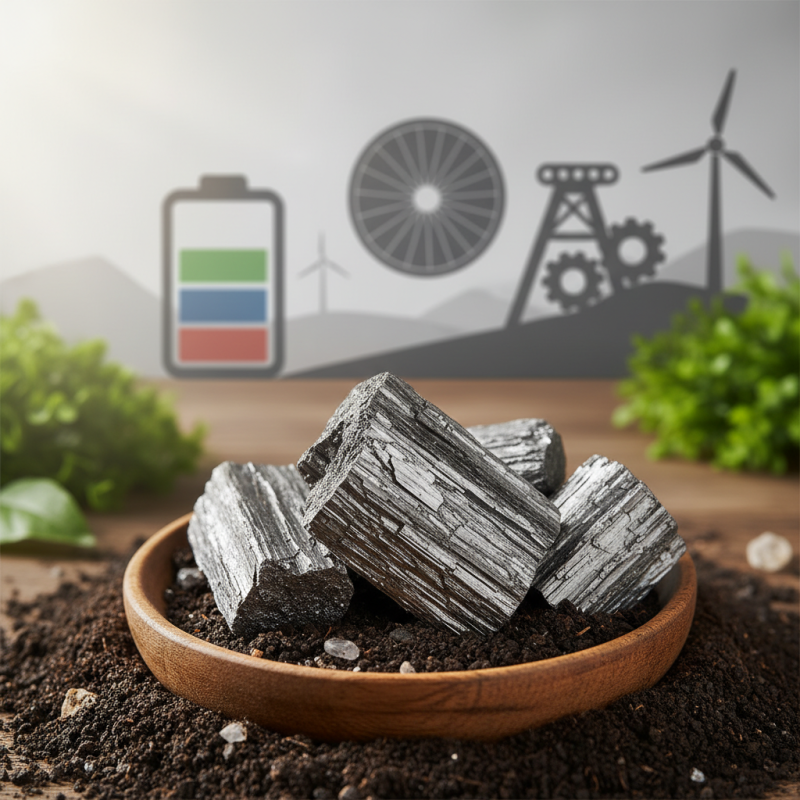
Graphite Natural is a fascinating and versatile material. It appears in our daily lives more than we realize. Its unique properties make it a valuable resource in various industries.
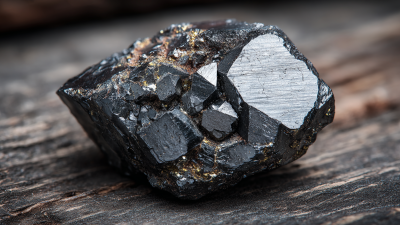
This form of graphite occurs naturally in the Earth's crust. It is different from synthetic graphite. Natural graphite has layered structures, allowing for excellent electrical and thermal conductivity. The industrial uses of Graphite Natural span from lubricants to batteries. Its ability to withstand high temperatures adds to its appeal.
Despite its many advantages, there are challenges. Mining practices can have environmental impacts. Additionally, the supply chain for Graphite Natural is complex. It is crucial to address these concerns to ensure sustainability. Awareness of these issues can lead to better practices in the industry.
What is Natural Graphite? An Overview of Composition and Properties
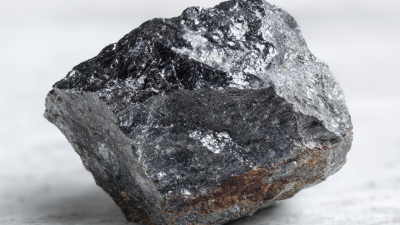
Natural graphite is a naturally occurring form of carbon with unique properties. It consists of layered planes of carbon atoms, held together by weak van der Waals forces. This structure provides excellent electrical conductivity and thermal conductivity. Additionally, natural graphite can withstand very high temperatures, making it valuable in various applications.
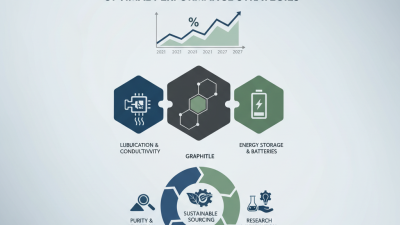
In industries, natural graphite plays a vital role. It is used in lubricants due to its low friction properties. It is also a key ingredient in the production of batteries, especially in electric vehicles. Its high thermal stability makes it suitable for manufacturing refractory materials. However, sourcing natural graphite can be challenging. Environmental impacts from mining activities raise concerns. Responsible sourcing is necessary to balance industrial needs with ecological preservation.
Furthermore, the recycling of graphite is still in its early stages. Much of the used material ends up in landfills. The industry must consider sustainable practices. Embracing innovation in recycling can mitigate waste and promote a circular economy. The path forward for natural graphite is complex and requires ongoing reflection and adjustment.
Natural Graphite Production and Uses in Industry
Types of Natural Graphite: Flake, Amorphous, and Lump Variations
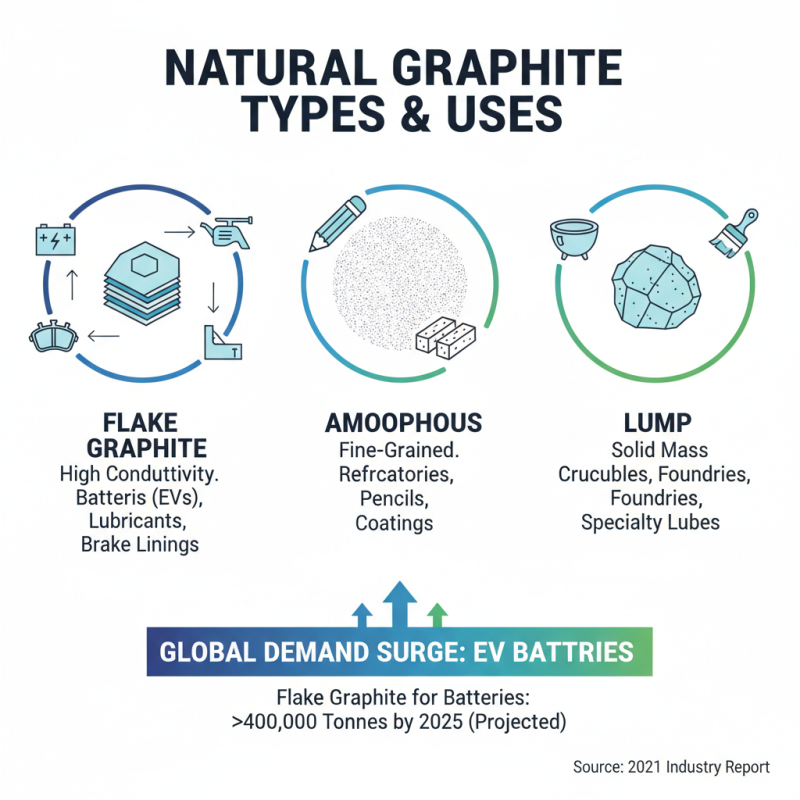
Natural graphite is found in various forms, primarily categorized as flake, amorphous, and lump types. Each type has unique properties and applications in different industries. Flake graphite is known for its high conductivity and is widely used in batteries, lubricants, and brake linings. The global demand for flake graphite has surged, driven by the growing electric vehicle market. According to a 2021 industry report, flake graphite consumption in battery production is projected to reach over 400,000 tonnes by 2025.
Amorphous graphite, on the other hand, has a more irregular structure. It is less conductive compared to flake graphite but is used extensively in the production of lubricants and as a filler in various materials. The amorphous form accounts for about 35% of the total natural graphite market, as per recent studies. This type is valued for its versatility, although its demand may fluctuate with market needs.
Lump graphite is considered a rarer form. It is typically of higher purity but has a smaller market share. Its applications are often limited to specialized products. There is less data available on lump graphite, which makes it a subject of reflection for industry analysts. Further exploration is needed to fully understand its potential.
Key Industrial Applications of Natural Graphite in Various Sectors
Natural graphite is a versatile material with numerous industrial applications. Its structure is composed of layers of carbon atoms, allowing for excellent
conductivity and lubrication. This makes it an essential component in various sectors, including manufacturing and energy.
In the automotive industry, natural graphite is used in brake linings and batteries. It enhances performance and durability. The energy sector relies on graphite for fuel cells and batteries. Its high thermal stability is crucial for these applications. Additionally, natural graphite is used in lubricants. It reduces friction, improving machine efficiency.
However, sourcing natural graphite raises concerns. Mining practices can impact the environment. Areas that extract graphite often face deforestation and habitat destruction. There is a push for sustainable practices to minimize these effects. Balancing industry needs with environmental responsibility remains challenging as demand grows.
Market Trends: Global Production Statistics and Demand for Natural Graphite
Natural graphite plays a crucial role in various industries. Its unique properties make it valuable in manufacturing batteries, lubricants, and even steel production. According to recent data, the global production of natural graphite reached around 1.1 million metric tons in 2022. This figure indicates a strong demand, particularly in the battery sector, where the push towards electric vehicles is accelerating growth.
The Asia-Pacific region dominates natural graphite production, accounting for over 70% of the total output. China remains the leading producer, but other countries are starting to increase their production capacities. The market is witnessing a shift as demand from the anode materials sector rises. Forecasts suggest that by 2025, the natural graphite market may experience a compound annual growth rate of around 4% to 5%.
Despite this growth, challenges persist. Environmental concerns regarding mining practices and resource scarcity require attention. Striking a balance between production and sustainability is essential. Additionally, fluctuations in global supply chains can impact availability. The landscape is ever-evolving, and industry players must adapt strategies to meet future demands effectively.
Technological Innovations: Advancements in Graphite Processing and Usage
Graphite has become a crucial material in various industries. Recent innovations in graphite processing are transforming its applications. From batteries to lubricants, graphite plays a vital role. Enhanced purification techniques now yield higher quality products. This improves performance in electronic components and energy storage systems.
New methods like flash heating and chemical vapor deposition are gaining popularity. These techniques create unique structures of graphite, enhancing its properties. For instance, graphene, a single layer of graphite, is revolutionizing materials science. It offers unmatched strength and conductivity. While these advancements are exciting, challenges remain. The balance between sustainability and demand for graphite must be addressed.
As industries rush to adopt new technologies, concerns arise about resource depletion. The environmental impact of mining is significant. Striking a balance between innovation and ecological responsibility is essential. Future advancements should focus on recycling and alternative sources. Emphasizing sustainable practices is crucial for the long-term viability of graphite in industry.